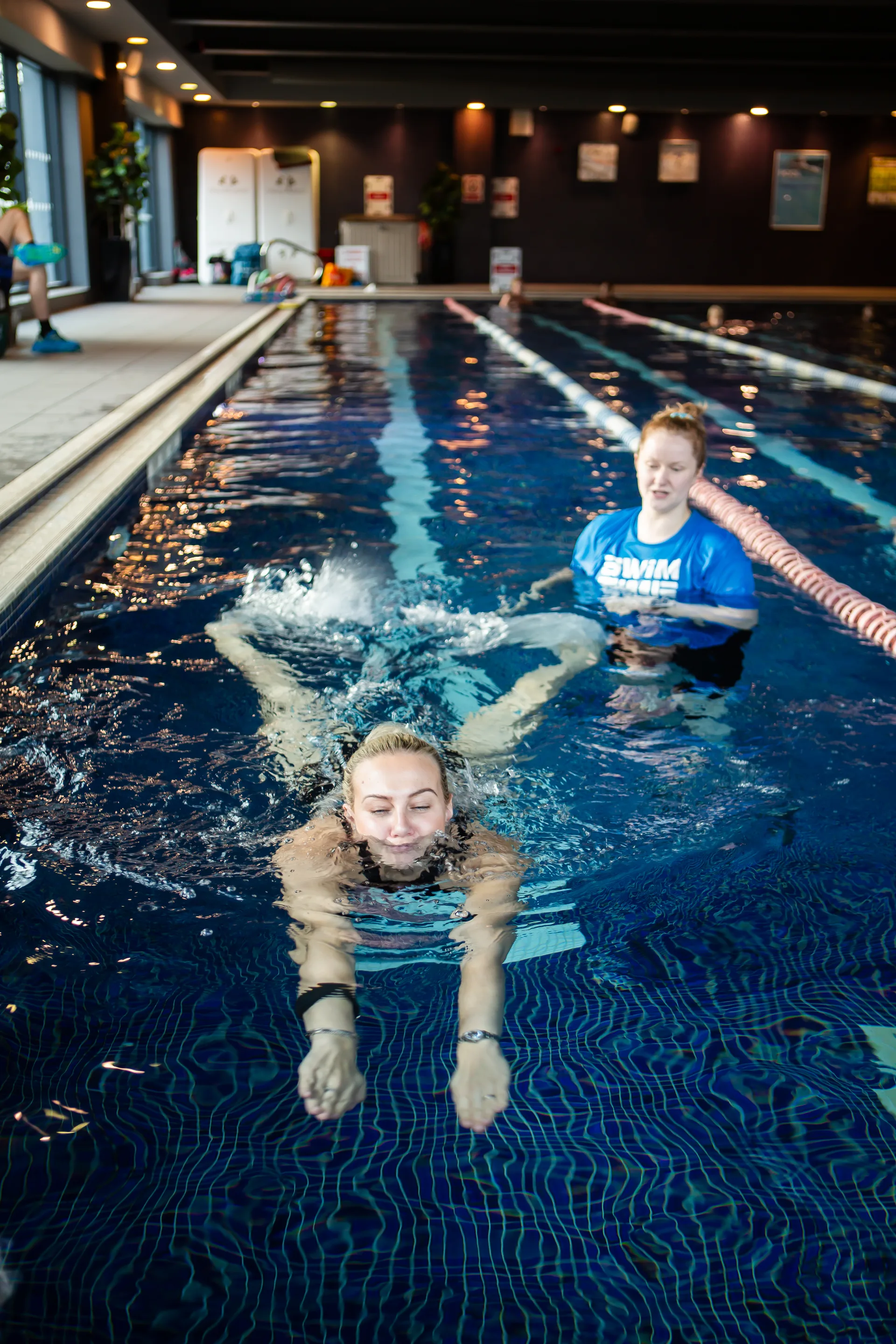
Scared of water or anxious about learning to swim as an adult? How Swimtime teachers help nervous swimmers at their own pace, and whether private or group lessons suit you.
At a glance
- Around 1 in 3 adults in the UK can’t swim, and many more feel nervous around water — you are not alone.
- Tell your teacher how you feel before you get in; they will adjust everything to suit you.
- You can stay in water you can stand up in, and you will never be asked to put your head under before you are ready.
- Choose private one-to-one lessons or a small, friendly group — whichever helps you relax.
- Progress is measured in small wins: standing comfortably, then floating, then moving.
Looking for swimming lessons? Search by postcode or town to see classes near you.
Find lessons near youYou are not alone
If you are an adult who can’t swim, you are not alone. Roughly 1 in 3 adults in the UK can’t swim, and many more feel nervous around water. Some never had the chance to learn as children, others had a bad experience that put them off, and plenty simply feel out of practice. Whatever your reason, it is never too late to learn.
A fear of water (aquaphobia) is a real obstacle when learning to swim, and it is nothing to be embarrassed about. It needs different support for each person — which is exactly what our teachers are there for. Nervous adult swimmers are some of the most rewarding learners we teach, because the progress, once it starts, tends to come quickly.
Why so many adults feel nervous about water
Adult nerves around swimming usually come from one of a few places:
- Never learning as a child. If swimming simply wasn’t part of your childhood, the pool can feel like unfamiliar territory as an adult.
- A bad experience. A frightening moment in the water — at any age — can stay with you for years.
- Worry about how it will look. Many adults tell us they are more worried about being watched than about the water itself. In a lesson, everyone is focused on their own swimming, and our teachers have taught hundreds of adults in exactly your position.
- Feeling it is “too late”. It isn’t. Adults learn to swim every week in our lessons, from their twenties to their seventies and beyond.
Understanding where the nerves come from matters, because it shapes how your teacher will work with you. That is why the first conversation happens before you even get in the water.
How our teachers help nervous swimmers
Our patient and experienced teachers create a safe, encouraging environment where you can take things at your own pace. Tell your teacher how you feel before you get in, and they will adjust everything to suit you.
- You can stay in water you can stand up in for as long as you like
- You will never be asked to put your head under before you are ready
- Exercises are explained step by step, with plenty of encouragement and no pressure
- Progress is measured in small wins: standing comfortably, then floating, then moving
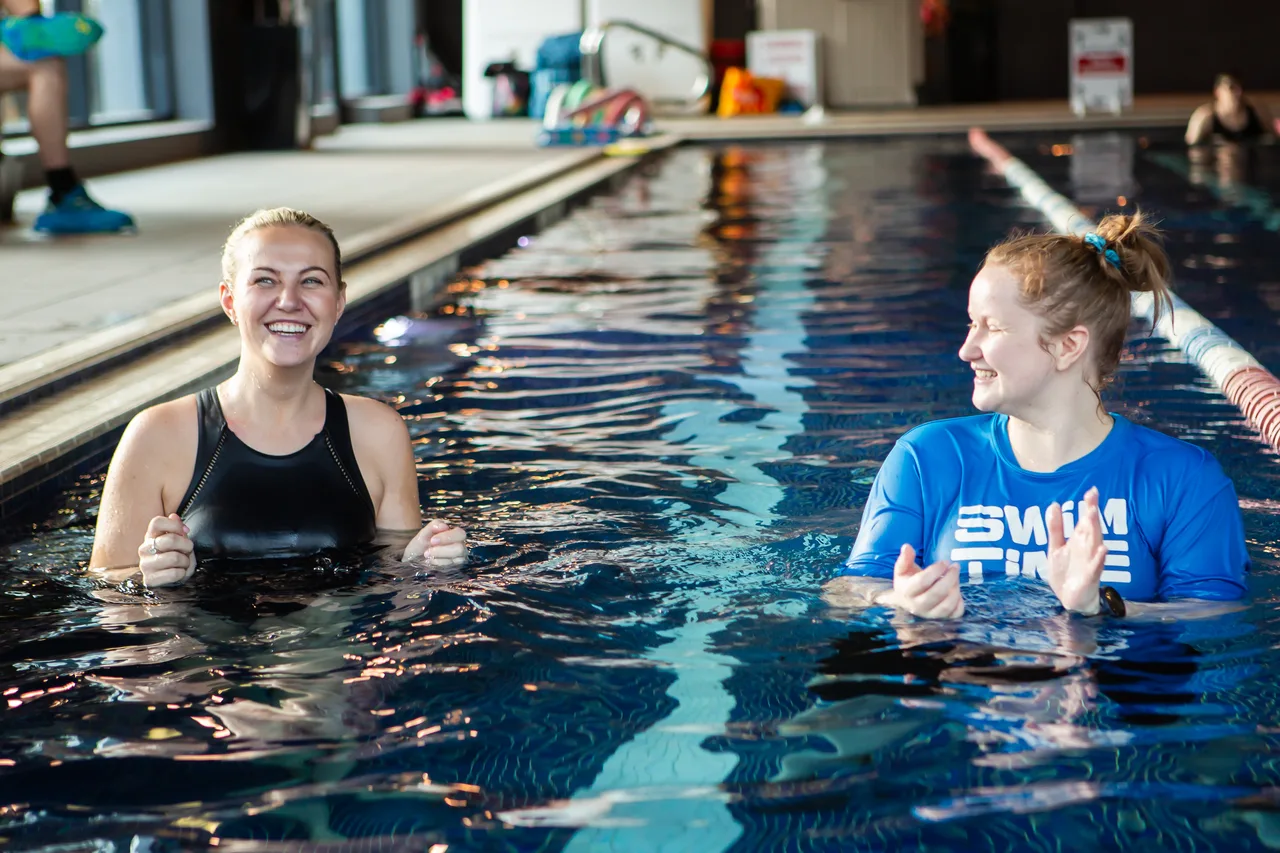
The order matters. Confidence comes before technique. Once you feel safe standing, walking and moving in the water, everything else — floating, breathing, gliding, and eventually swimming — builds on top of that foundation. Rushing the early stages is the most common mistake in adult learn-to-swim, and it is one our teachers are trained to avoid.
What the first few lessons actually look like
Your first lesson is about feeling comfortable, not swimming lengths. Your teacher will talk to you about what you would like to achieve and help you get used to the water at your own pace. Many nervous swimmers tell us the first lesson was far easier than they expected.
A typical early journey looks something like this:
- Lesson one: getting in, walking in the water, feeling the support of the water around you, and learning to stand up safely from a floating position
- Next lessons: holding the side, gentle floating with support, and getting your face comfortable near the water — only when you are ready
- As confidence grows: floating without support, gliding, and the first movements of a stroke
There is no fixed timetable. Some adults move through these stages in a few weeks; others take longer, and that is completely normal. Consistency helps more than speed — swimming regularly, even once a week, keeps the water feeling familiar. Our guide to how long it takes to learn to swim explains what affects the pace of progress.
Private or group lessons when you are nervous
You may feel more comfortable learning one-to-one, with the focused attention of your teacher. Or you may benefit more from peer support in a group, learning alongside friends or family.
Private lessons are available for one, two or three swimmers, so we can tailor your learning journey to your ability and confidence level. For very nervous swimmers, a private lesson is often the easiest place to start: it is just you and the teacher, and everything moves at your pace. Group lessons, on the other hand, show you that other adults are in the same boat — which many people find reassuring in itself. Our guide to private vs group lessons explains the differences in more detail.
Fitting lessons around your life
Work, family and other commitments often get in the way of doing things for ourselves. Swimtime lessons run at varying times through the week — days, evenings and weekends — so there should be a lesson at a time that suits you. Many of our pools are in hotels and leisure clubs with comfortable, quieter water, which nervous swimmers often prefer to a busy public session.
Why it is worth taking the plunge
- Confidence: instead of shying away from the water on holiday or with family, you can join in — and that self-assurance often carries into other parts of life
- Less stress: leave your phone in the locker; swimming helps relax your body, soothe your mind and reduce anxiety
- Gentle on the body: swimming works the whole body without putting much strain on your joints
- Something for life: once you can swim, it is an activity you can enjoy all year round
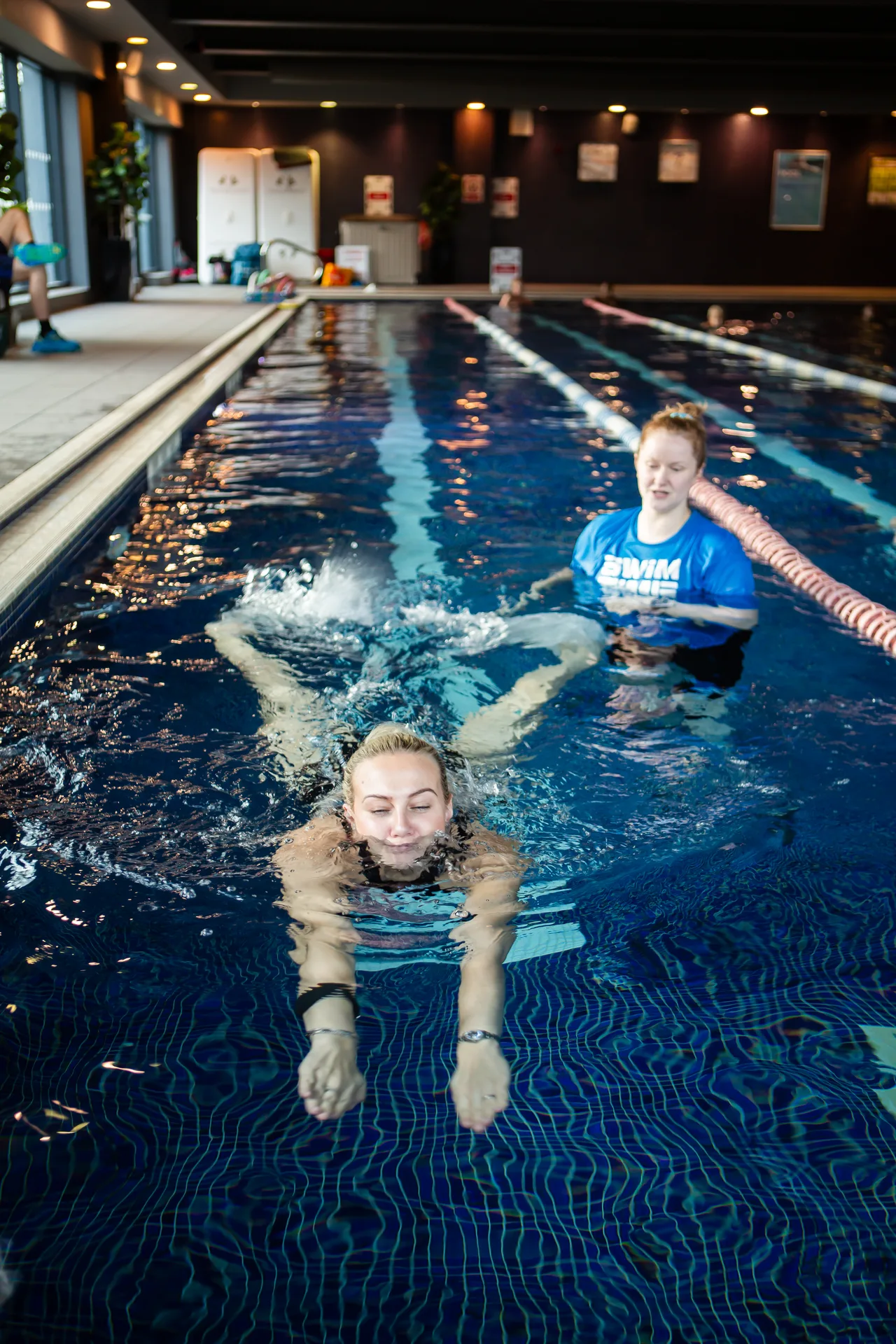
Perhaps the biggest change our adult learners describe is not in the pool at all. It is booking the holiday without worrying about the pool, getting in the sea with their children or grandchildren, or simply no longer having to make excuses. Learning to swim removes a quiet, everyday limit on your life — and most adults who do it say their only regret is not starting sooner.
Common questions from nervous swimmers
What should I wear? Whatever you feel comfortable in. A well-fitting swimsuit or trunks is all you need; some swimmers prefer a rash vest or swim leggings, and that is absolutely fine. Goggles can wait until you are ready to put your face in.
Will I be the only beginner? Unlikely — and even if you are, it doesn’t matter. Adult lessons are built around individual progress, not keeping up with anyone else.
What if I panic? You will be in water you can stand up in, with your teacher right beside you. You can stop, stand, and take a breather at any point. Nothing is forced.
Am I too old? No. We teach adults of every age, and the water is kinder on joints than almost any other exercise.
Next steps
Find adult swimming lessons at a pool near you, or speak to your local Swimtime team about the right class for where you are now. If you would like to know what to bring and what to expect on the day, our beginner’s guide to learning to swim as an adult covers the practical details.