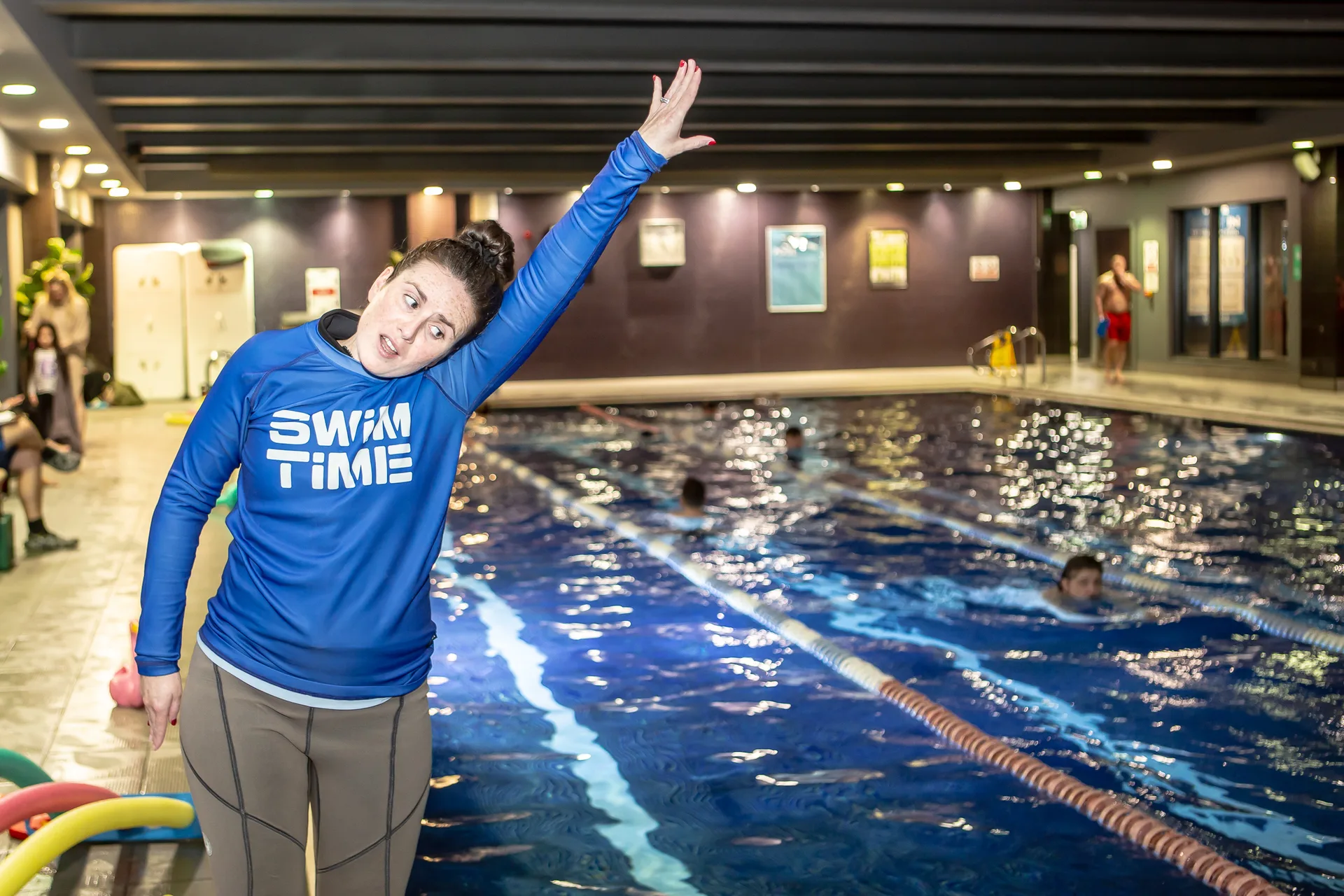
Everything parents need to know before a first swimming lesson: what to pack, what happens in the water, how teachers help nervous children settle, and how progress is celebrated.
At a glance
- Talk about the lesson positively and arrive in good time.
- Bring a costume, a towel, a warm layer and a snack — floats and equipment are provided.
- Teachers are used to first-lesson nerves and will help your child settle in.
Looking for swimming lessons? Search by postcode or town to see classes near you.
Find lessons near youBefore the lesson
A little preparation helps the first lesson go smoothly for you and your child.
- Talk about it positively. Tell your child what will happen: they will meet a friendly teacher, play games and learn to be safe and happy in the water.
- Arrive in good time. Rushing makes everyone anxious. Give yourselves time to find the changing rooms and get ready without hurrying.
- Check what your pool provides. Your local Swimtime team can tell you about changing facilities, lockers and anything your pool asks swimmers to bring.
What to bring
- A swimming costume or trunks your child is comfortable in
- A towel, and something warm to wear afterwards
- Goggles, if your child likes wearing them
- A swim hat if your pool asks for one
- A snack and a drink for after the lesson — swimming is hungry work
You do not need to buy any floats or equipment. Everything used in the lesson is provided.
Meeting the teacher
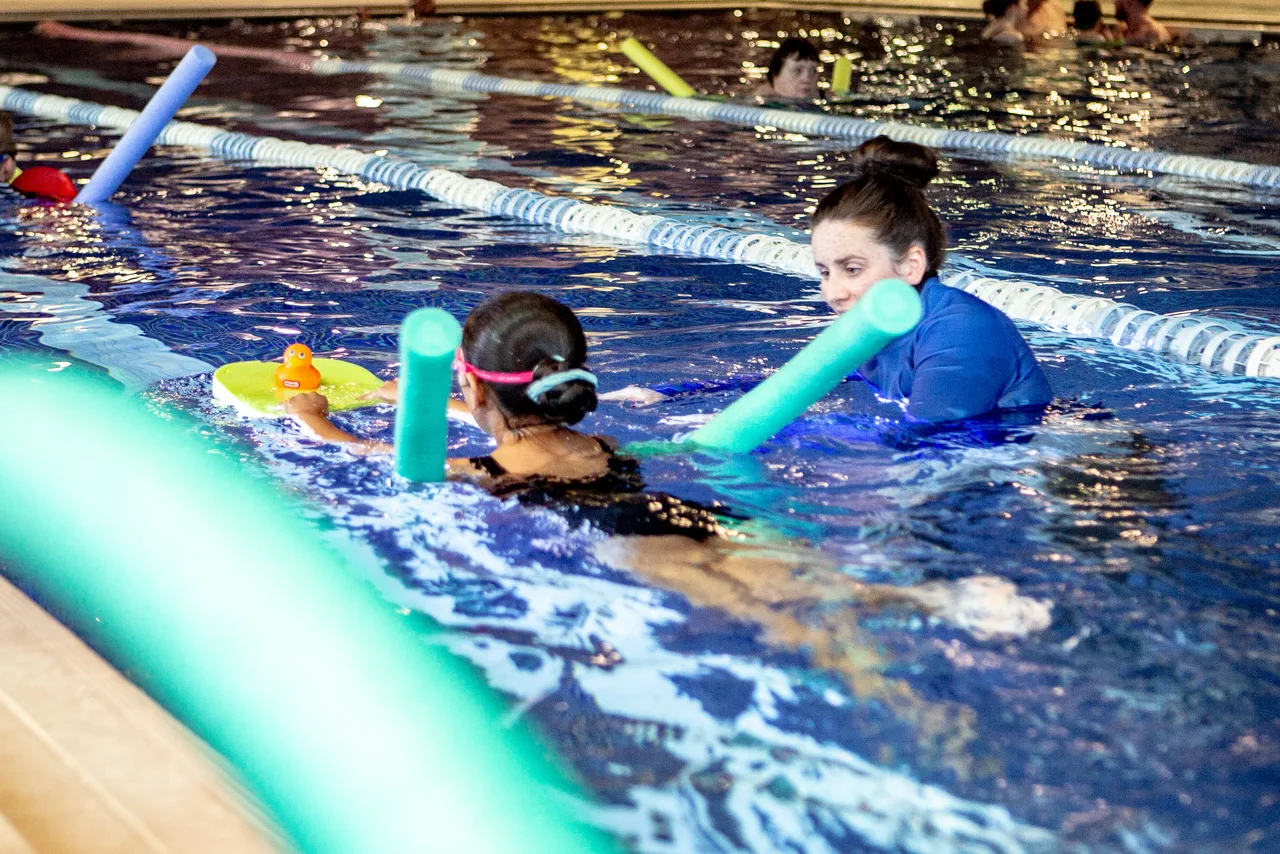
Your child's teacher will greet them, learn their name and help them settle in. Swimtime teachers are used to first-lesson nerves — from excited wrigglers to children who would rather stay wrapped in their towel — and they know how to put each child at ease.
If your child is nervous, tell the teacher at the start. A quick word helps them give your child exactly the right amount of encouragement.
What happens in the water
First lessons are built around fun. Children learn through games, songs and play, using colourful floats and equipment, so the serious business of learning to swim never feels like hard work.
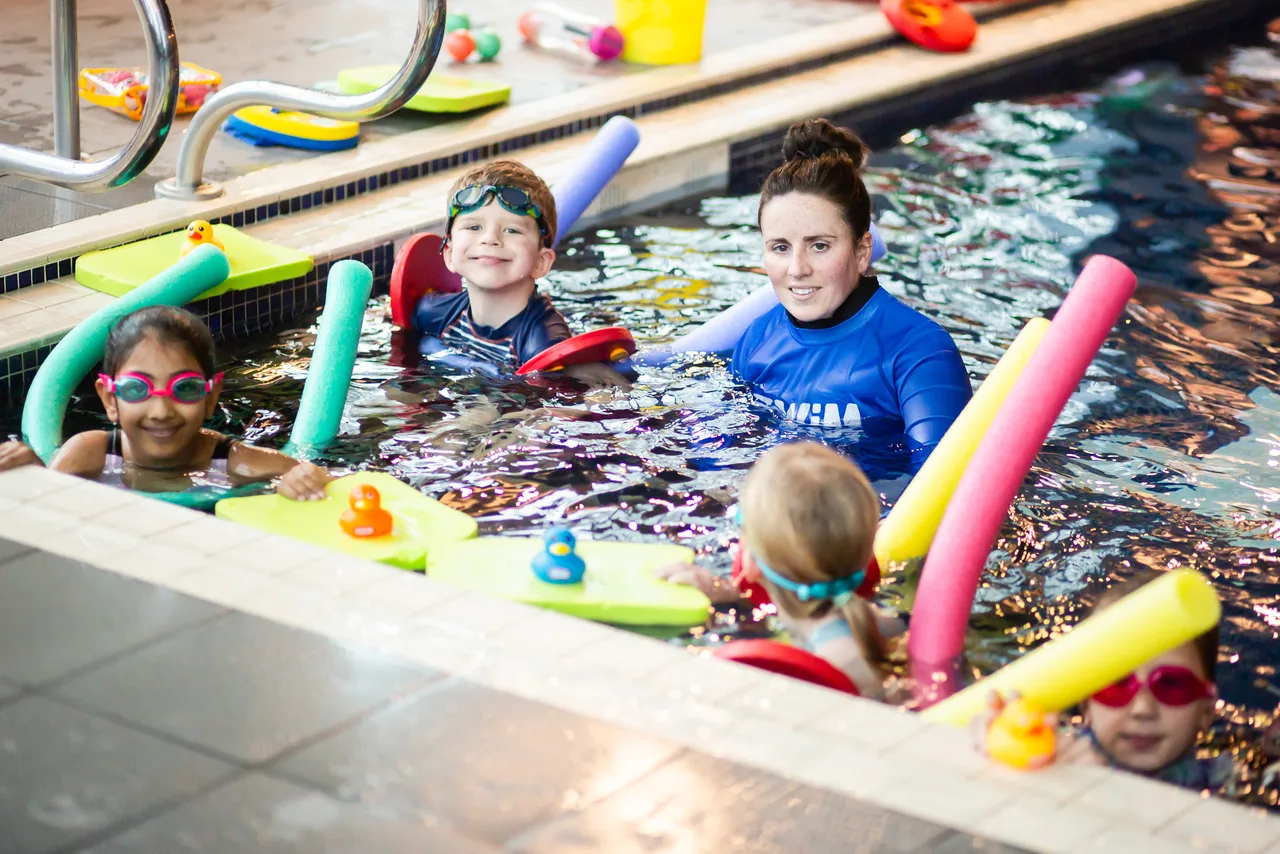
- Getting comfortable moving around in the water
- Blowing bubbles and getting faces wet, when they are ready
- Floating and kicking with support from floats and the teacher
- Learning pool safety: listening, waiting their turn and holding on at the side
Celebrating progress
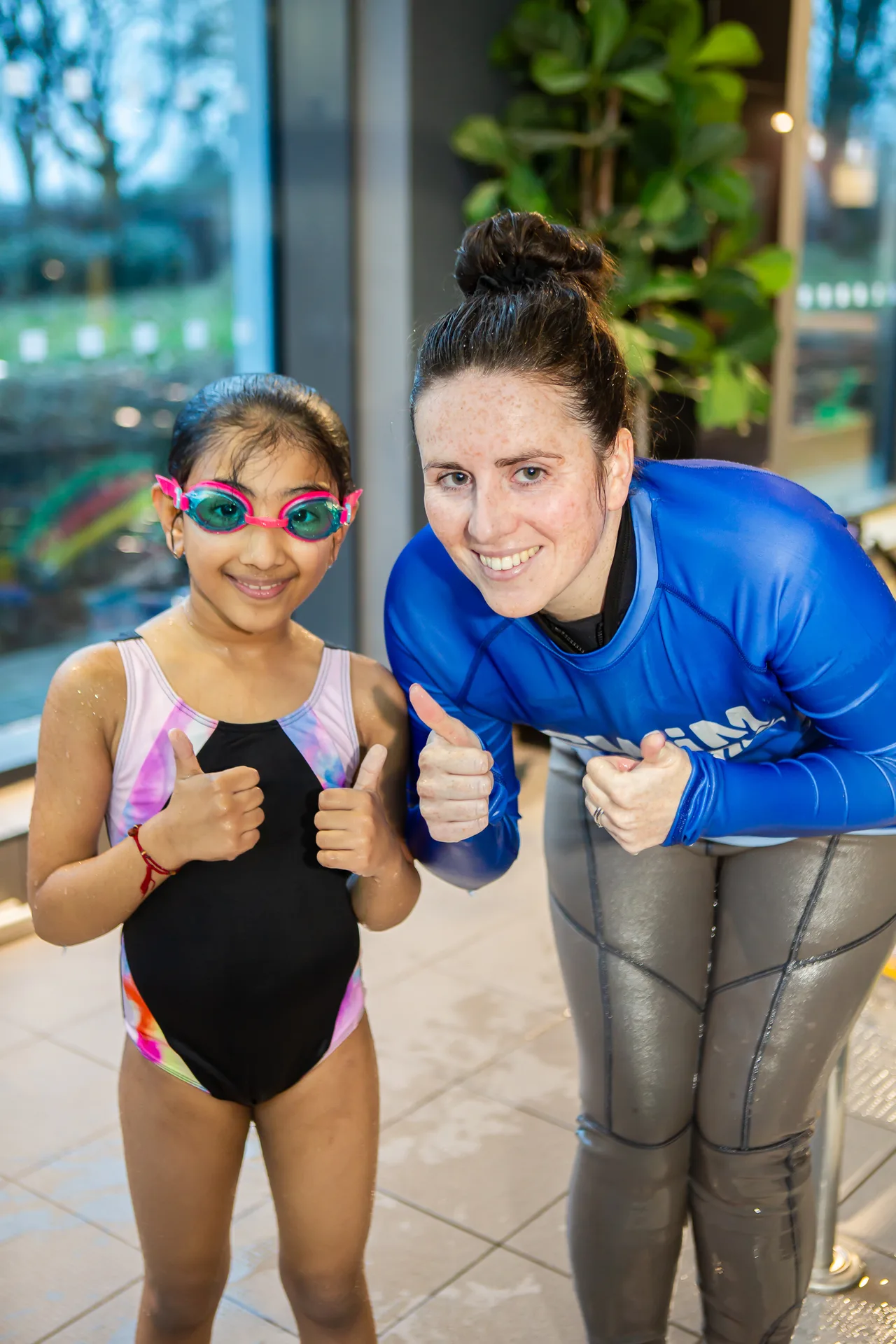
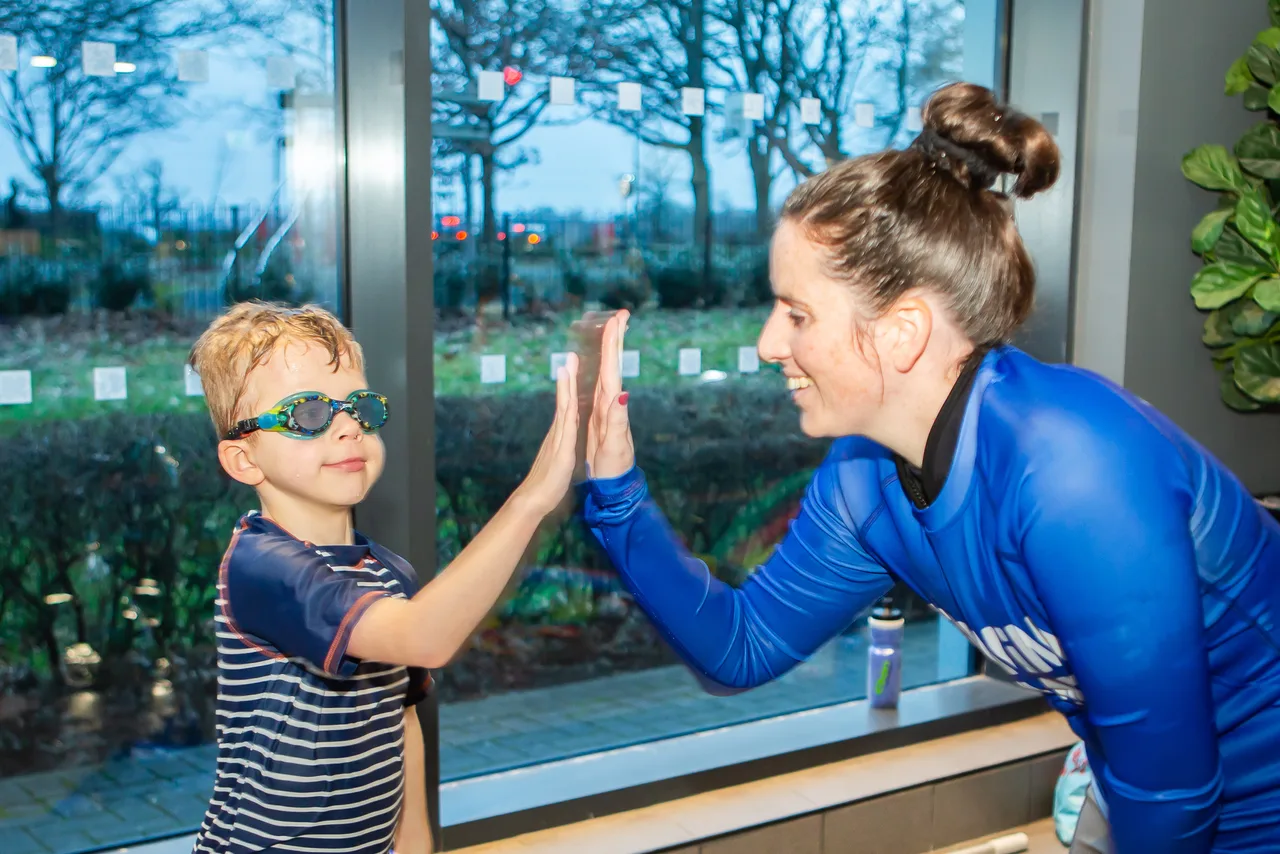
Every small win counts, and children are praised for effort as much as achievement. As they move through the Swimtime stages they work towards badges and certificates that mark real milestones in their swimming.
If your child gets upset
It happens, and it is usually short-lived. Teachers see it often and will gently help your child settle. Most children who are unsure in week one are splashing happily by week three. If you have any worries, speak to the teacher after the lesson — they will be glad to talk it through.
Next steps
Find children's swimming lessons at a pool near you, or speak to your local Swimtime team about the right class for your child's age and confidence.