Choosing swimming lessons for your child can come with plenty of questions. If your child has special educational needs and/ or disabilities (SEND), you may also be wondering how they will manage in an unfamiliar pool or whether a teacher will understand the support they need.
Perhaps your child loves the water but finds busy environments overwhelming. Or they are nervous about getting into the pool at all. Whatever their starting point, Swimtime knows that finding suitable lessons begins with understanding them as an individual.
At Swimtime, we believe swimming is a skill for life, no matter the barriers you may experience. This article explains what to consider before booking and how to help your child take their first steps.
Can children with SEND join swimming lessons?
Children with SEND can learn to swim, although the lesson setting and support they need will vary. Some enjoy learning alongside other children. Others may benefit from more individual attention or a different approach to teaching.
SEND covers a broad range of needs. Some children are autistic or have ADHD, while others may need support because of a physical disability or learning difficulty. Neurodivergence and SEND can overlap, but they do not mean exactly the same thing.
A diagnosis alone will not tell a swimming teacher how your child learns best. Sharing what helps them in everyday situations can be just as valuable.
Choosing the right swimming lesson
Come and chat to us! The best place to start is a conversation with a friendly Swimtime team member. Explain what your child enjoys, where they might need help, and any concerns you have about the pool environment.
Useful questions to ask include:
- How many swimmers will be in the class? Swimtime group lessons usually have a maximum of six per class, but this can be even less depending on the venue, so it's worth asking.
- Are private lessons available? Private 1:1, 2:1 and 3:1 classes are available at most Swimtime venues, and beneficial for swimmers who need more personalised or tailored teaching.
- How can our teachers adapt their instructions? Your child might respond well to a demonstration or need extra time to process what has been said.
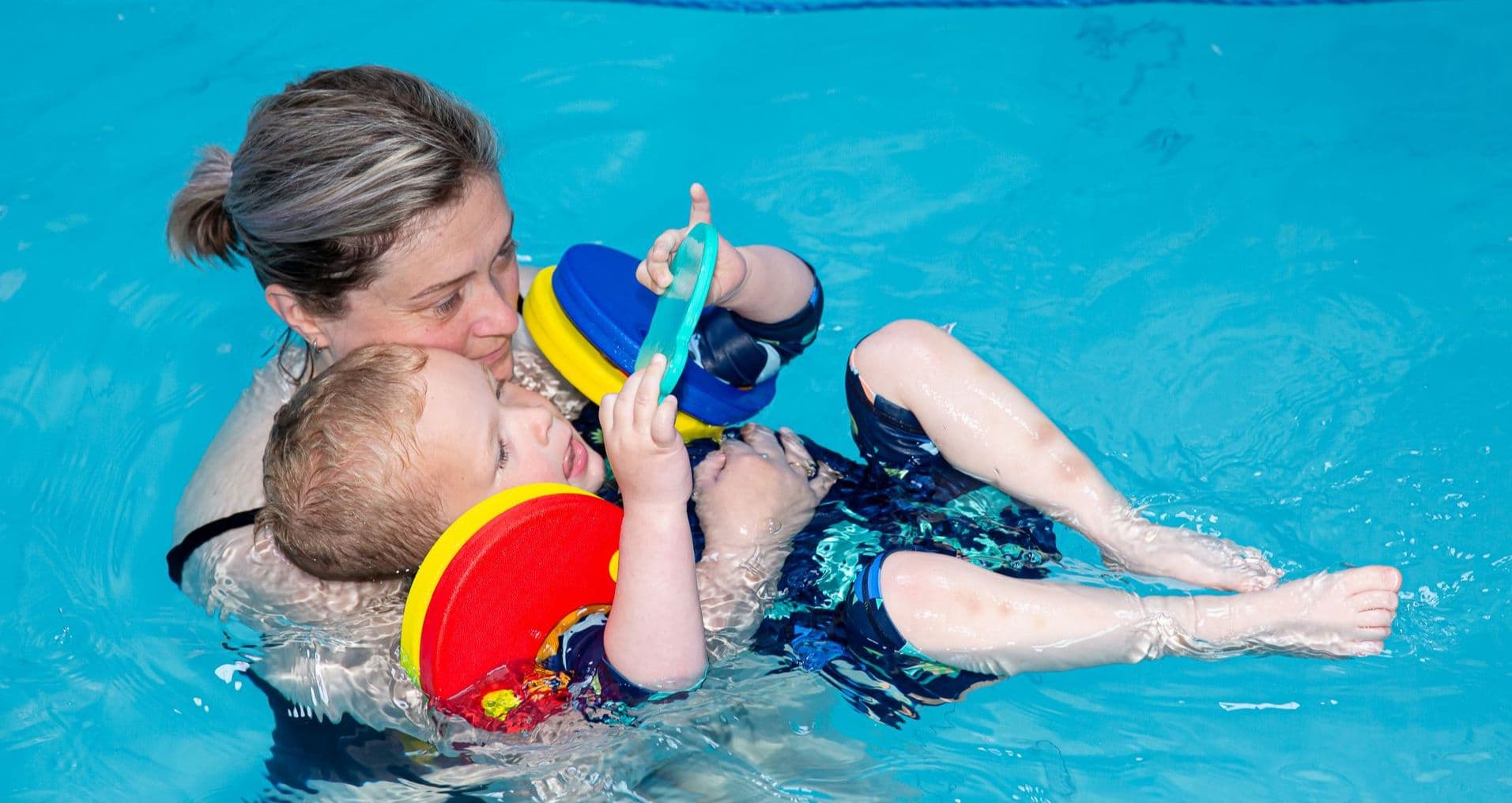
- Are parents allowed in the water? Parents also have the option to join their child in the water to provide support throughout the lessons.
- Can we visit before the first lesson? Seeing the pool and changing rooms in advance may make the first session feel more familiar. Swimtime also offer Trial lessons. A no-strings-attached, one-off lesson to test the waters.
- What access arrangements are available? If your child needs help entering the water or using the changing facilities, check the details with your local team.
Understanding sensory needs in the pool
Swimming involves more than being in the water. The echo in the pool space might be difficult for one child, while another may find the changing room experience more challenging than the lesson itself.
It helps to explain any sensitivities of triggers before your child starts. Be specific where you can, E.g. “They find sudden splashing upsetting". This gives the teacher more useful information to work with than “They don't like swimming”.
If your child becomes overwhelmed, discuss what happened with your teacher. An adjustment to the activity or more time to become familiar with the setting may help. The aim is to find an approach your child can engage with, without rushing them through something they find distressing.
Preparing for your first lesson
There is no need to practice swimming skills before your child begins. Helping them understand what to expect can be a useful first step.
Depending on what works for your child, you could:
- Talk through the visit in order. Explain what happens from arriving at reception to getting changed after the lesson.
- Use pictures to show the setting.
- Try swimming kit at home. Give your child time to get used to their swimwear. If they find goggles uncomfortable, discuss this with the teacher.
- Leave enough time to arrive comfortably. A rushed journey can make an unfamiliar experience even harder.
- Share helpful information with the teacher. Explain how your child communicates discomfort and what usually helps them feel settled. Don't have time or unable to speak with your teacher? You can enter and update any medical needs, notes and additional information in your Swimtime customer portal which is provided to the teachers ahead of a lesson.
Keep preparation manageable. Some children appreciate a detailed explanation, while others do better with a short conversation close to the lesson.
What does progress look like?
It is natural to look forward to your child swimming independently. Along the way, smaller achievements deserve recognition too.
Entering the water more comfortably can be a meaningful step. For another child, progress might be trying an activity they previously avoided.
Swimtime's Learn to Swim Programme provides a structured pathway through stages of learning. It covers swimming technique alongside essential water safety skills, with progress assessed as swimmers work towards awards.
A pathway gives learning direction, but children will not all move through it at the same speed. Speak to your child’s teacher about their current goals and how the activities can support them.
If progress feels slow, ask what the teacher is noticing. Your child may be building confidence that is not yet reflected in a new award. If the current lesson format is proving difficult, it may also be time to discuss another option.
Taking the next step with Swimtime
You know your child best. Sharing that knowledge helps your swimming teacher understand how to support them, and the conversation can continue as their needs change.
If you are considering Swimtime SEND lessons, find your nearest venue and speak to the local team before booking. They can explain the lesson options and discuss the support available at the pool.
Your child does not need to arrive feeling confident. The first step is finding a suitable place to begin.